Independent Study
VMCS4950, Spring/Summer 2026
Mount Allison University
Course Description:
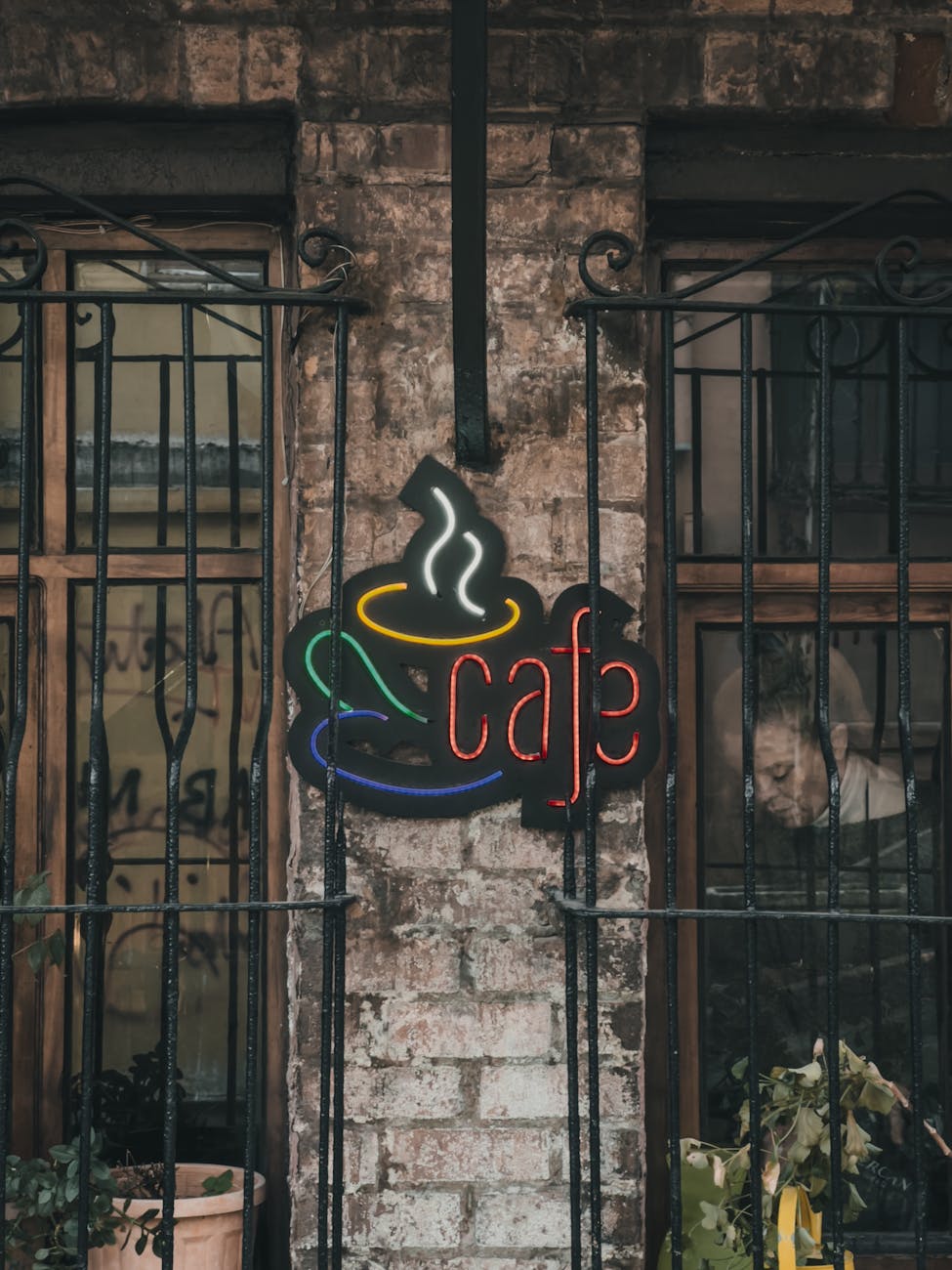
From the coffeehouses of 17th-century London and Vienna to the globally replicated aesthetic of the contemporary independent café, this course examines how coffee shop culture has shaped and sustained the public sphere as a site of intellectual exchange, social negotiation, and civic life. The student will critically interrogate the paradox of the “independent” café — analyzing how a homogenized visual and experiential grammar (exposed brick, reclaimed wood, curated playlists) operates across ostensibly unique spaces, and what this standardization reveals about authenticity, gentrification, and the commodification of community. Drawing on urban sociology, tourism studies, and cultural geography, the course trains particular attention on the performative dimensions of café space — how local establishments stage, brand, and narrate themselves differently for tourist audiences versus regular patrons, and what those negotiations tell us about place identity and belonging. Through a combination of ethnographic observation, close reading of design and marketing materials, and engagement with theorists from Habermas to Oldenburg, the independent student will develop an original field-based research project centred on café culture in their own urban environment.
Possible Reading List/Annotated Bibliography List (to be developed further in concert with the student)
- Bar-Tura, Asaf. 2011. “The Coffeehouse as a Public Sphere: Brewing Social Change,” in Coffee – Philosophy for Everyone: Grounds for Debate, edited by Scott F. Parker and Michael W. Austin, series editor Fritz Allhoff, John Wiley & Sons: 89-99.
- Bryant, Simon. 2009. “Afterword,” in Everything But the Coffee: Learning About America from Starbucks. University of California Press: 229-236.
- Bryant, Simon. 2009. “Real Coffee,” in Everything But the Coffee: Learning About America from Starbucks. University of California Press: 30-63.
- Chayka, Kyle. 2024. “Algorithmic Globalization,” in Filterworld: How Algorithms Flattened Culture. Doubleday: 92-130
- Cowan, Brian. 2005. “Inventing the Coffeehouse,” in The Social Life of Coffee: The Emergence of the British Coffeehouse. Yale University Press: 79-112.
- Fraser, Nancy. 2017. “The Theory of the Public Sphere: The Structural Transformation of the Public Sphere (1962),” in The Habermas Handbook – New Directions in Critical Theory, edited by Hauke Brunkhorst, Regina Kreide, and Cristina Lafont, series editor Amy Allen, Columbia University Press: 245-255.
- Gregg, Kelly, Jeffrey Nathaniel Parker, Conrad Kickert, and Ian Trivers. 2026. “Culture, Consumption, and the Aesthetic Homogenization of Independent Coffee Shops in the United States and Canada,” in City, Culture and Society, vol. 44 (2026): 1-10.
- Hartmann, John. 2011. “Starbucks and the Third Wave,” in Coffee – Philosophy for Everyone: Grounds for Debate, edited by Scott F. Parker and Michael W. Austin, series editor Fritz Allhoff, John Wiley & Sons: 166-183.
- Jeffrey, Alex, Lynn A. Staeheli, Chloé Buire, Vanja Celebicic. 2018. “Drinking Coffee, Rehearsing Civility, Making Subjects,” in Political Geography, vol. 67 (2018): 125-134.
- Laurier, Eric and Chris Philo. 2007. “’A Parcel of Muddling Muckworms’: Revisiting Habermas and the English Coffee-Houses,” in Social & Cultural Geography, vol. 8, no. 2, April 2007: 259-281.
- Maifianti, Khori Suci, Sarwititi Sarwoprasodjo, Rilus A kinseng, and Dwi Sadono. 2024. “Women in Coffee Shops: Negotiating Gender Roles and Transforming Public Sphere in West Aceh, Indonesia,” in Pakistan Journal of Life and Social Sciences, vol. 22, no. 2: 23680-23695.
- Nanz, Patricia. 2017. “Public Sphere,” in The Habermas Handbook – New Directions in Critical Theory, edited by Hauke Brunkhorst, Regina Kreide, and Cristina Lafont, series editor Amy Allen, Columbia University Press: 605-609.
- Parker, Scott F. 2011. “Sage Advice from Ben’s Mom, or: The Value of the Coffeehouse,” in Coffee – Philosophy for Everyone: Grounds for Debate, edited by Scott F. Parker and Michael W. Austin, series editor Fritz Allhoff, John Wiley & Sons: 71-88.
- Sadler, Brook J. 2011. “Café Noir: Anxiety, Existence, and the Coffeehouse,” in Coffee – Philosophy for Everyone: Grounds for Debate, edited by Scott F. Parker and Michael W. Austin, series editor Fritz Allhoff, John Wiley & Sons: 100-112.
- Szeman, Imre. 2017. “Coffee as Popular Culture,” and “And It All Boils Down To … What Is in a Cup of Coffee?” in Popular Culture: A User’s Guide, John Wiley & Sons, Inc.: 19-28.Wagner, Antonin. 2000. “Reframing ‘Social Origins’ Theory: The Structural Transformation of the Public Sphere,” in Nonprofit and Voluntary Sector Quarterly, vol. 29, no. 4, December 2000: 541-553.
Course Evaluation:
- Regular Teams Meetings to Discuss Readings (list co-created by instructor & student)
- Annotated Bibliography
- Project Proposal
- Final Research Project (including short video segment/summary for social media)
“the coffee-house allowed men who did not know each other to sit together amicably and expected them to converse.” – Markman Ellis
“It’s the realm of coffee shops … that share the same hallmarks everywhere you go … The homogeneity of these spaces means that traveling between them is frictionless, a value that Silicon Valley prizes.” — Kyle Chayka

