In the links here I’ve gathered the materials that I had previously provided to students while working with them as a Teaching Assistant. This is basic content including links to interesting and/or relevant material; links to material discussed in face-to-face tutorials; and some content related to writing resources.

Introduction to Communication Studies 2020-21
Here is a link to the Youtube list I have created for this course where I will occasionally link videos that are relevant to the course.
Crash Course has a series of short videos on YouTube on Media Literacy that does a pretty good job of reviewing some of the concepts we talk about in our course. These videos are not comprehensive, but they may refresh your memory or help you better understand some of the concepts.
Media Theory:
If you’re interested in learning more about Harold Innis and his legacy, you can listen to this documentary recording of many different scholars discussing him on the anniversary of his birth in 1994.
Here is a really interesting episode of The Secret History of the Future podcast that considers our conception of self in relation to photography of the past and the present. The hosts do a pretty good job of introducing Marshall McLuhan‘s ideas regarding the medium while also discussing our social selves in a networked world: “From Zero to Selfie.“
Canadian Media:
TIFF had a panel discussion about what makes a film Canadian. This discussion is useful considering the conversations we have in tutorial about Canadian content.
This article considers the role of CanCon (Canadian content regulations) in music streaming. Do you think we should regulate Canadian content on our streaming platforms? How would we go about doing this?
As the panel set with making recommendations regarding the Broadcasting and Telecommunications Acts continues to deliberate, a number of articles have and will continue to be written. This article suggests that the panel has been tasked with including some sort of regulation/policy that incorporates streaming services in Cancon requirements (either in terms of financial contribution or Cancon requirements, perhaps both). The article also reminds us that these recommendations will be given to whichever party is ultimately in power after the federal election in October so the outcome of the panel will be dependent on that party’s interests in concert with the panel’s suggestions. If you are interested in the panels deliberations, they have provided their preliminary findings here (June 2019).
One of the biggest concerns coming out of the conversations around the changes to the Broadcasting and Telecommunications Acts is the question of streaming services. How do we deal with companies like Netflix? Should they have to play by the same rules as Canadian media providers? How will it affect the Canadian media industry if outside streaming services come in, make money from Canadian subscriptions without giving any back in the form of supporting our industry or paying taxes? This article asks some of these questions as well as asking if we should force Netflix to provide Canadian content on their service, just as we (currently) force broadcasters.
On Patriot Act (also available on Netflix), Hassan Minaj regularly dives into important and often controversial issues in order to explore either the obvious controversy, or expose the more subtle controversy of which his audience may be less aware. On the episode, “The Two Sides of Canada,” Minaj considers the dichotomy that is both Justin Trudeau and the perception of Canada as a nation. This is a useful video because shows some of the ways in which Canada is seen as being peaceful, environmentally-friendly, and, to a certain extent, above reproach, while pointing out that that is not the reality.
Canada has been taking steps to help bring high-speed internet to the more remote regions of the nation as this article suggests. Do you think this is a viable/long-term solution to the issue?
While Patriot Act is talking more specifically about American internet in “Why Your Internet Sucks,” a lot of what is mentioned in the video is relevant to the Canadian rural internet situation and, of course, the global conversation around the digital divide.
Residential Schools & Reconciliation:
You can find links to the reports, history, and calls to action that came out of the 2015 Truth and Reconciliation Commission here. There is a lot of information here that may overwhelm you a bit with the living history of Canada and the cultural genocide perpetrated on our First Nations peoples as well as its continued effects.
A related, but separate issue is that of Missing and Murdered Indigenous Women and Girls. The government has also, more recently, released a report on this issue that can be found here.
Wab Kinew talks to George Stroumboulopoulos about stereotypes that have stuck with us and have, in part, been tied to the Residential School System.
In the Fall of 2020, the Mi’kMaw of Nova Scotia started their own commercial moderate livelihood fishery. The resulting violence and racist attacks on the part of the settler fishers in the area was covered by a number of media organizations in Canada and around the world. How was the story covered differently by different organizations or different nations? Here you can find some brief background information on the ways the 1752 Treaty and 1999 Supreme Court Marshall Decision play into this situation, but also how the corporate fishery is benefitting off of the conflict between the smaller fisheries (settler commercial fishers and Mi’qmaw fishers). How do both the State (the Federal government) and Corporations play a role in the subjugation and oppression of Indigenous people and other peoples of colour?
Indigenous Media:
When Jeremy Dutcher won the Polaris Prize in 2018, he talked about incorporating and reclaiming his native language into his music as well as making space for First Nations peoples in the Canadian music scene.
Here are a couple examples of people beading their own QR codes on twitter as an attempt to “[look] towards the future while utilizing a method of the past.”
During the initial lockdown in March 2020, a number of Indigenous Pow Wow dancers and organizers worked together to create an online PowWow to create community and keep people connected while also continuing their traditions from afar. This is one way in which Indigenous peoples are finding new spaces and media to carry on and, occasionally, adapt traditional oral culture that requires a face-to-face connection. What does this say about the conception of oral societies as obsolete or outdated? Did you experience any similar communities during the lockdown?
A group of high school students, teachers, and staff in Nova Scotia wrote, performed, and produced a music video to bring awareness to issues surrounding Missing & Murdered Indigenous Women & Girls (MMIWG) and the Red Dress Movement.
Fake News:
Finland has been working toward educating their citizens to spot fake news as this article points out. The government and education system are working together because they think media literacy is important for democracy and education in their country. Do you think this approach could be applied elsewhere? What would you change to adapt it here?
Check out your ability to spot fake/troll social media accounts here.
Algorithms:
The “Bug in the System” episode of The Secret History of the Future podcast talks about the history of computer programming and algorithms and ties that history to some of the conversations we are having today about the social structures inherent in algorithmic systems.
Video Game Industry:
Here we have Hassan Minaj again delving into a topic to show the reality that is often hidden from many. In this case, Patriot Act considers the video game industry and its labour issues in “The Dark Side of the Video Game Industry.”
Media Industry in General:
Tied to the video above and its focus on the labour issues in the video game industry, researchers in the UK and Canada have been working together to study and track movements focused on labour issues and the growth of unions for all new media workers, beginning with journalists. They have a very useful website that gathers information about the results of their research as well as links to more traditional publications of their work. How does unionization change the media landscape?
Media History:
Again, The Secret History of the Future podcast does a great job of connecting media of the past to current media practices. In the episode “Dots, Dashes, and Dating Apps” the hosts connect current digital dating apps to a history of faceless dating using the telegraph.
Audience:
While the industry has been measuring audience numbers when it comes to day and date television viewing for years, some parts of the industry are starting to capture numbers of the audience who view the same content outside of traditional viewing windows and on non-traditional platforms. Until recently, this aggregation of data has been haphazard as no major television distributor/content producer has been willing to invest heavily so the research companies who provide that data haven’t invested too much either. Finally, though, major distributors are looking to capture all of that data to better inform their content and marketing decisions. Variety has just reported that one of the largest television station owners has decided to look beyond basic television ratings to inform their advertising deals.
Privacy & Surveillance:
These three articles work together. Recently, journalists discovered that the Toronto Police had been participating in a secret test run of facial recognition software in their operations for tracking and identifying people in the city. The software that the Toronto Police were using is known as Clearview AI. The New York Times has a story on the company behind the app and some of the privacy issues involved with its use in the United States. Finally, for more context on privacy and surveillance as they relate to facial recognition and ongoing issues globally, you can check out a podcast episode produced by the CBC here.
We’ve all heard that Facebook and other social media platforms have issues with security and privacy (which is a problem considering how many of our businesses are now tied to these platforms), but here’s a shortish read from Wired that talks about the issue a little more directly. It talks about how these platforms work to convince us to give up more and more of our privacy for ease of use and for a better user experience:
“Actually, it’s an old trick. Facebook used it back in 2010 when it let users opt out of Facebook partner websites collecting and logging their publicly available Facebook information. Anyone who declined that “personalization” saw a pop-up that asked, “Are you sure? Allowing instant personalization will give you a richer experience as you browse the web.” Until recently, Facebook also cautioned people against opting out of its facial-recognition features: ‘If you keep face recognition turned off, we won’t be able to use this technology if a stranger uses your photo to impersonate you.’ The button to turn the setting on is bright and blue; the button to keep it off is a less eye-catching grey.”
Pardes, Arielle. “How Facebook and Other Sites Manipulate Your Privacy Choices.” Wired. 12 August 2020.
With the move to pandemic-forced online learning, a number of new education technology platforms have popped up to help students and teachers through the change. The platforms have often been created in a rush or with specific goals in mind. Many critics, including students themselves, have complained about the surveillance and policing that seem to be at the heart of the platforms. Do you feel that the technology used in your education are meant to police you or help you learn?
TikTok
TikTok has been in the news a lot in the Summer of 2020. While the platform was preparing to go on the market for American ownership, there was a lot of talk on the platform about the way the algorithm was pushing specific types of content to users’ for you page. TikTok creator CeceliaisGray has a few videos discussing this and TikTok creator KingKhieu has a few showing how the algorithm works. In June, TikTok users and Kpop fans claimed responsibility for the low attendance numbers at a Trump rally in Tulsa (perhaps you were part of this movement as well?). This protest action by (mostly) zoomers, likely meant a great of lost data for the Trump campaign. This was one way to take a stand politically while also thwarting the tracking and surveillance techniques of the campaign. Do you think this form of hacktivism is useful? Finally, while Microsoft considers buying TikTok, President Trump is discussing banning the platform from the US which would involve restricting internet traffic and creating a firewall similar to the Chinese block on external internet traffic that America and Trump have been so critical of in the past. How will this affect net neutrality? What implications does this have for the future of social media platforms and their need to conform to a particular president’s ideology? Things move quickly online — especially in an election year! Shortly after Trump made his announcement, the CEO of TikTok stepped down due, in part, to the pressure from the president. And now Walmart is one of the possible buyers of the platform. What implications does this have for the platform? Would you prefer a tech giant like Microsoft purchase TikTok alone or a massive corporation like Walmart work with them? Why? Will TikTok ever be the same? Will it be better or worse?
Here’s an update on the TikTok sale: it has been purchased by Oracle, though I believe the algorithm was left out of the sale which is an interesting development! What do you think this means for the future of the platform? What is a social media platform like this without its algorithm?
Again, TikTok user CeceliaisGray has posted a video discussing the ways that TikTok as a platform is beginning to change post-sale, linking it to the changes that happened to YouTube once they were bought by Google. Creators have started spending more money on tools to create content for TikTok to entice advertising money and push their content to the top of the for you page/algorithm. All of this changes the dynamic of TikTok, as it did with YouTube, but also creates barriers for entry as it is much more expensive to create a TikTok video with professional equipment than with a regular cell phone. Do you see changes to your TikTok feed? Which channels do you watch on YouTube? Are they more professional or more homemade looking? How do you think advertising influences participatory cultures?
Dr. Casey Fiesler has posted a thread on Twitter discussing a recent report in the Wall Street Journal about the TikTok algorithm (yes, this could have gone in the algorithm section above as well). One of Fiesler’s interesting observations is that the WSJ report mentions, but doesn’t expand on, the result that “the more personalized TikTok gets, the most likely you are to see abusive content” (Fiesler 2021). As more researchers spend time working through the public face of the TikTok algorithm, more of these little nuggets of information will begin to emerge. How do you think we should deal with this information? Should we deal with it? If so, who should deal with it? If not, is this just a case of “buyer beware” for TikTok users?
Digital Blackface
This is a fairly new concept that has really found its place with social media. The idea is that white people, in particular, take on the roles, personalities, and characterizations of Black people and Black performers, making use of (often) caricatures as well as actual audio/visual content available online. As this Wired article points out, the concept isn’t really new as it has connections to minstrel performances of the past. These were performances, often in actual blackface, though not always, that made use of African American entertainment performed by white people for a white audience. Some have argued that this is cultural appreciation — particularly when using gifs to represent their own reactions on social media or certain filters, for example — but this comes from a history of both taking material from Black performers to whitewash it (make it “acceptable”) for white audiences and stealing a winning formula because no one (“who matters”) will notice or care. Here is a book in the York library (you’ll have to log in to read it) on minstrelsy in early animation and the digital companion to the book online. I’ve really only given a taste of the concept here, but there’s still a lot to consider. Can you think of other examples of digital blackface? Or a specific example? How does it connect to previous performers?
Tied to Digital Blackface and Intellectual Property, Black TikTok creators are now fighting for the rights to dances that they have created, but white creators have taken as their own. Using legal methods and IP to take control of their image is one way these creators are working to control their own images and ensure white creators aren’t making money off of their free labour. Do you think this will ultimately change the way creators operate on platforms like TikTok?
Representation
Tied to the concepts of Digital Blackface, Whitewashing, and Cultural Appropriation, is the importance of Representation in our media. This Variety article discusses findings from a study by the National Research Group regarding representation in media. Seeing oneself represented in media can lead to higher self-esteem as well as looking for work in that same media. Do you see yourself represented in the media you consume? Which stories would you like to see portrayed on screen that are currently being overlooked?
Advertising
In new versions of product placement or tie-in advertising, corporations like Coca-Cola are looking to streaming services for ways to bring their products to the masses now that traditional commercials are less visible. Along with their attempts at direct marketing online through social media and search engine optimization, these corporations are making deals with the streaming services. How does this change the viewer’s relationship with the corporation being advertised as well as the service? How do you, as a subscriber, feel about paying for a service and still receiving subversive advertising? What if the advertising is also supporting a good cause, as with Coca-Cola’s support of the healthy food fundraiser mentioned in the linked article? How does corporate involvement change the fundraiser?
Public Sphere
The events in the United States of December 2020 have brought to light a number of conversations regarding the public sphere and free speech. With the removal of the outgoing president of the United States, Donald Trump, from almost all social media platforms as well as the removal of the social media platform Parler from Amazon’s servers and the Google and Apple app stores, questions are being raised regarding the muzzling of certain voices and whether that limits our free speech. Based on your understanding of the public sphere as well as a political economy consideration of the situation, how do you view what has happened? We have talked about spaces like Twitter as representing a modern public sphere, if this is true, what effect does the privatization of the public sphere have?
Social Media
A new resource has recently been released. This is an academic collection of chapters related to social media and the self. There are a number of interesting pieces in this collection that consider social media as a communication device and a business. They consider the concepts of authenticity and identity and the role of social media in their formation. The book is called Social Media and the Self: An Open Reader and is only available online.

Communication Policy 2016-17
Changes to Canadian Content Rules
History of the CBC (by the CBC)
Time Warner/AT&T Merger:
- Variety Magazine
- Evens and Donders 2016 article on mergers & content issues
- Sarandos (Netflix) comments on the merger
Marshall McLuhan Heritage Minute
Article on the changing face and role of journalism and the media.
Media, Culture, & Society 2016
Article on digital literacy in Nigeria: Babalola, Titilola. “The Digital Humanities and Digital Literacy: Understanding the Digital Culture in Nigeria.” Digital Studies.
Facebook Offering Free Internet:
My own blog post on the digital divide. Like the article by Babalola (which is discussed in my blog post), my post is related to Digital Humanities, but there is some basic material about the digital divide in there.
Posts about “Lemonade”:
Social Media Citation:
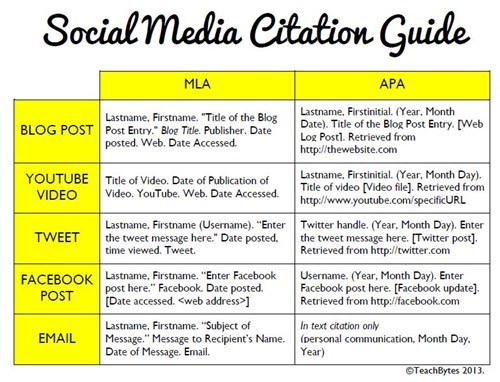
- I’ve also used Tweet2cite as a resource for formatting any tweets
Ads used in tutorial for practice:
- Electronic Frontier Foundation
- I have created a list of related/interesting videos for this course on YouTube (called 2700 — yes, I am super creative!). For now you can find videos of John Oliver discussing “Encryption” and “Government Surveillance” (the Government Surveillance episode also includes an interview with Edward Snowden) as well as a number of videos of Cory Doctorow discussing the ideas in Little Brother. There are so many more videos of him speaking available online, but I’ve chosen a few to include here. I’ve also included a couple videos of Edward Snowden — there are also many more of him available (for a man who can’t return to his country, he appears digitally quite often!)
- Just a quick warning for those of you who have never watched John Oliver: He is a comedian so he makes light of some very serious stuff. This also means that he can be pretty crass — he swears (it is a late-night HBO show) and discusses male anatomy quite a bit in the Government Surveillance epiosde, for example.
Children & Justice (Equity Studies) 2014-16
Truth and Reconciliation Commission: Here is the basic website, the summary of the report released this past summer, and the voices of the survivors.
Shannen’s Dream & Attawapiskat: Shannen’s Dream, a national call to action to improve education for all children; Huffington Post story including video following the opening of the school (finally) in Attawapiskat.
UN Convention on the Rights of the Child; the Convention in child-friendly language.
Residential Schools: Indigenous Arts site including background on the system; Canadian Encyclopedia background; CBC history of Residential Schools; the legacy of the residential school system; more background on the school system; Anishinabek Nation background on the school system.
Hunger Count: National survey results of food bank use.
Charter of Rights and Freedoms: PDF or website
Education in Canada: Information regarding education in Canada in relation to other OECD nations. Particularly relevant to your own interests (and mine): “Canada ranks among the countries with the highest tuition fees.”
Homeless Youth: One story with videos following individual homeless youth.
The Panopticon: A building designed to allow all members of the group (students/prisoners/etc.) to be seen by one central person (teacher/guard/etc.). This idea has been discussed by many philosophers, most notably Michel Foucault. Foucault relates the concept of the panopticon to our society that needs to observe (and punish?) its citizens. This has been extended to our current surveillance state.
“Child Labour is Canada’s Invisible Crisis”: a story about child labour in Canada.
Child Labour: an encyclopedic entry on child labour in Canada, including history.
Child Farm Workers: a recent story regarding fatalities on an Albertan farm. The author considers whether we should change the laws regarding child labour. Trigger Warning for child death.
Commission for Labor Cooperation: guide to Child Labour in Canada.
“The Protection of Young Workers in Canadian Employment Law”: an overview of child labour protection laws.
Child Labour and the Provinces: a summary of child labour laws.
Fingers to the Bone: a short documentary on migrant youth workers in the US (5:48).
OECD Interactive Tool: online tool to visually compare Canada and its provinces to other OECD countries on issues related to health.
 Jessica Bay