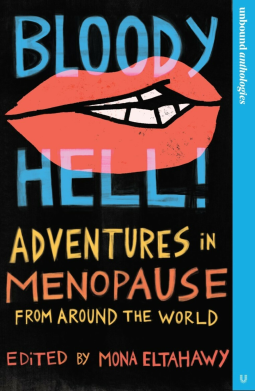
Well this is unintentionally timely! After reading Bloody Hell! Adventures in Menopause from Around the World, I’ve had further thoughts about gender and identity and I just happened to decide to write about them during the week of the 47th President of the United State’s inauguration. Normally these two things would be completely unrelated, it’s not like a cis-man would naturally connect to a book about lived experiences of menopause, but one of the Executive Orders signed after the inauguration stated that the federal government would only recognize two genders going forward. The order also laid out “biological” definitions of those two genders that are questionable, but I’m not really interested in talking about that here – there are many people who are better suited to that conversation. Suffice it to say that I disagree with the current American president’s order from on high and am terrified for how his proclamation is being received here in Canada.
What’s in a womb, I wondered? What does it really mean? — Una Mullally, p. 166
Last time I talked about this book, I discussed my struggles with loss of my access to my brain. This time, I’m interested in connecting to the changes to gender that the stories in the book allowed me to consider. I’ve never before considered that I was anything but a woman — never questioned my gender once — but this stage of life has me wondering what that definition means more and more. I’ve never planned to birth children, but I still had all the requisite parts. I vividly remember telling a group of girl friends that the only good thing I could see about pregnancy itself was the loss of your period for nine months (turns out not even that is true!). We were probably 13 years old at the time and the look of shock on all faces ensured that I never mentioned that position in public again (I wasn’t against children, I just didn’t feel child birth was a necessary part of the process). Of that group of five girls, by the way, three of them had eight children between them and two of us remain childless by choice. Even when faced with the possibility of losing some of those parts to protect the rest of my body from possible cancer growth, I never questioned my position as a woman. I may not always act like a “girlie-girl,” but I identify as woman.
So, I don’t think that my “woman-ness” or femininity has ever been tied to my reproductivity. Why is it that now, when that reproductivity is absolutely leaving me, am I questioning what makes a woman (for me)? Certainly some of that questioning must be tied to society’s expectations of women and the discourse surrounding menopause — I’m not sure anyone can completely ignore the conversations that tie a woman’s worth to her ability to reproduce. However, I’ve been eagerly anticipating my new role as “crone” or “spinster.” Just as I’m achieving my long-awaited goal, I seem to be taking a step back and wondering if those terms are too gendered even for where I am in my journey.
for cis women, mainstream depictions of menopause include a sort of neutering or de-womanising — M’Kali-Hashiki, p. 206
To be clear, I am not suggesting that I am on a trans journey of discovery and that I will emerge from this as the reborn non-binary (or trans-masc) unique being that I was always meant to be. No, this is not that kind of questioning. This is the kind that wonders how I embody my gender as I age in a society that increasingly ignores me and has no use for me. This comes with a sense of freedom — my clothes, hairstyle, and footwear are all much more comfortable now than they were 20 years ago — but also a (re)learning. I have memories and experiences that I know represent me, but that I also know don’t represent the me that I am anymore.
We need a word … for the grief of losing our past selves. We need a ritual that can serve as a baton connecting the ellipses between what we were and what we are becoming — Mona Eltahawy, p. 233
So while I’m learning how to live in this new time and how to feel comfortable in this new skin that feels a bit like another gender, I’m also thinking about how this is the next part of the journey for everyone. In Bloody Hell!, Ann Marie McQueen likens menopause to a stage in “the ultimate Hero’s Journey” (p. 131) and I love this idea. The idea that menopause is one of the later stages of the Hero’s Journey where we get to gather and regale one another with tales of past glories is very appealing.
In any case, I feel, as I did when beginning puberty, as a blob of modelling clay ready to be shaped into something new and both scared and excited to discover who I can be when I come out on the other side. I suspect I’ll care less about fitting in than I did during/post-puberty and I’m hoping for more self-confidence, but it’s more likely I’ll just be less concerned with what people think and I guess that’s ok too.
verily, Transformation is excruciating. — Mohja Kahf, p. 88
If you like the quotations I included and think this collection of essays might be for you or someone you care about, the book is amazing! It was published by Unbound, a publisher that uses a built-in crowdfunding publication model. The book comes out in March of 2025 and I wrote an actual book review on StoryGraph if you’d like to read that.
Eltahawy, Mona, ed. Bloody Hell! Adventures in Menopause from Around the World. Unbound. Digital ISBN/UID: 9781800183711, 6 March 2025.
It seems only right that the thing that should get me actively writing again is a book of essays about menopause — the ultimate transition for adults with a uterus. The collection, Bloody Hell! Adventures in Menopause from Around the World, is edited by Mona Eltahawy and brings together essays by 17 individuals about their own experiences with menopause. It is inspiring and surprisingly helpful for a non-medical, non-self-help collection of writing. Given the dearth of actual, useful information available on the menopause journey, though, I suppose it shouldn’t be that surprising that a book of people talking about their own experiences would include useful nuggets of knowledge!
I don’t remember what I used to be and I don’t know who I am becoming. But I welcome her! — Mona Altahawy p. xiv
While reading these essays, I felt like each new writer was perfectly capturing my story even though I am a cis white woman in Canada and the authors are Black, Brown, Asian, trans, nonbinary, cis, people living all over the world. The menopause journey may be as individual as the people experiencing it, as Eltahawy says in the introduction (p. xvii), but the fear, frustration, lack of knowledge, and acceptance certainly feel universal when laid out like this.
My entire life is built around my brain. Letting it fog up could be devastating to my career as a professor, a researcher, a writer” — Sonora Jha p. 68
Many of the authors in the book talk of the freedom of menopause and of finding ways to embrace this transition, even as they had to learn to come to grips with it. This is the part that struck a chord with me the most and resonates the most for my writing and future. It’s the first part that is the hardest though — coming to grips with the transition and getting through it.
While I am still perimenopausal, I was diagnosed with idiopathic intracranial hypertension in 2017 after some time in hospital. At the time, I had the exact same crisis of “faith” as Jha mentions in the quotation above — who am I without my brain? I couldn’t (and still can’t) pull facts out of the aether like a magician, discuss topics endlessly and widely like a wizened philosopher (or pothead, depending on your love for philosophy), or even remember the words for everyday items. I had to relearn how to read comfortably and I regularly made up words that I was sure were real or used completely inaccurate words in place of the real ones. It was terrifying. I wrote everything down when I had to present anything and cut back on the number of public events I did. I also slept a lot more, drank more water, and adjusted the food I ate along with adding new meds to my diet.
I improved with time, medication, and dealing with other medical issues that came up during/after this diagnosis. I got used to the new normal. I can’t multitask as well as I used to, I can’t hold as many ideas in my head at once, and I only occasionally forget words for things I use everyday now. Until things changed again. I went to the doctor scared that things were getting worse. I had an eye test to see if the pressure in my head was worse. I did a cognitive test that is usually only completed by seniors to test for Alzheimer’s. I passed, though I felt I was slower than I could have been. Neurologists say there’s nothing wrong. My eye doctor says there’s no negative change.
My nurse practitioner and I have begun discussing perimenopause during our well woman appointments. I can’t have estrogen supplements because I have a clotting disorder so she looks for non-hormonal options for me, but neither one of us knows what this means for me when HRT becomes necessary so we’re trying to get me into an ob/gyn before then. None of that helps when my brain fails me and I wonder who I am now.
I want to be present in this time in my life, not thinking wistfully about my ‘fertile’ years and not rushing ahead to senior citizen” — M’Kali-Hashiki p. 200
In January 2023, I made the decision to begin working full time at my corporate job rather than work full time hours for them, while also trying to do multiple jobs. I jumped into corporate culture and onto the corporate ladder with both feet. I think I did a pretty good job — I got a couple of promotions, title changes, and raises, including moving to a different department entirely and into the most challenging role I’ve had in my life to this point. It was exciting and I felt supported. I thought it would be easier, in some ways, than what I had been doing: I had one job, my focus wasn’t split in many directions, when my workday was over, I was done for the day, and the work didn’t tax my brain in the same way. This isn’t to say it wasn’t challenging or difficult — I wouldn’t have wanted to do it if it wasn’t challenging in some way — but I wasn’t developing new ideas, researching them, and writing about them in isolation on a regular basis. I did that from time to time, but the projects were much smaller, and the research was much more superficial. I felt confident I could do this job even on my “bad brain” days. And I was doing it well. And then I was let go in November of 2024. Not quite 2 years from deciding to go all in with this direction.
Now I wonder, had it been enough? Can I just never access the parts of my brain that I used to touch so easily as I descend further into the brain fog that began with my diagnosis and continues with perimenopause? Or do I just need to rethink how I work, the speed at which I work, and how and what I choose to write about?
The self is not a static point in time, but rather an evolution of selves — Mona Eltahawy p. 235
Eltahawy’s collection took me in so many directions that there will be other posts about this, but I wanted to start with the one that kept floating to the top of my (overly-pressured) brain — coming to grips with the loss of self, when your self is so tied to your intelligence. And I want to be clear that this is tough for everyone — losing the ability to know why you are doing anything is terrifying and a huge loss of self, but I can only speak for myself here and losing my brain felt, and some days continues to feel, like becoming a completely different person. When I go out into the world on a bad brain day and try to be the person people expect me to be, I’m worse than if I didn’t try. So, if you see me and I’m not who you think I always was, maybe I’ve finally decided it’s not worth the effort to try to be the old me anymore.
If you like the quotations I included and think this collection of essays might be for you or someone you care about, the book is amazing! It was published by Unbound, a publisher that uses a built-in crowdfunding publication model which is super innovative and I’ll probably write about this too! The book comes out in the UK in March of 2025 and should be available in North America by June of 2025 (but check in March!). I wrote an actual book review on StoryGraph if you’d like to read that.
Eltahawy, Mona, ed. Bloody Hell! Adventures in Menopause from Around the World. Unbound. Digital ISBN/UID: 9781800183711, 6 March 2025.
I work from home. I know, you’re saying, we’re academics, we *all* work from home. True, but my paying job is also remote. I moved to a work-from-home situation formally in March of 2020 when the pandemic hit, but I often worked from home or in spaces other than the office before that because my employer was flexible with my school and teaching schedule. This meant that I often completed mind-numbing data entry late at night while watching tv or organized digital documents late at night while watching tv (yes, there’s a trend here). This meant that I wasn’t trying to do these things in the office while others were adding to my pile of work to do or asking for help. It also meant I could fit more work into a day than regular office hours allow and didn’t have to try to do important writing tasks late at night when my brain was mush.
When I first switched to working from home, I was prolific! I mean, I ignored my dissertation of course, but I worked more hours at my office job than I ever had when I went to the office *and* I produced more than I normally did in that time. I was really enjoying what I was doing as well. With the move to remote working came a switch in my duties which offered me some freedom to explore some of the more organizational aspects of corporate work while also increasing my participation in technology, employee training, and marketing conversations. All of this meant that I was very keen to work as many hours as my employer was willing to pay.
At the same time, I was completing the academic semester and “working” on helping my students through completing their course assignments, followed by grading those assignments, and various administrative duties. This work was also engaging! Students who barely spoke in tutorials, were suddenly appearing at Zoom office hours and engaging in every online space I had set up for them. I felt a connection to my students that I’d been missing for the past 10 months in person.
Finally, I was working on some ongoing writing projects. Yes, the dissertation was nominally one of those, but I also had a few ongoing articles and delayed presentations I had to get through. In addition to the actual writing of these items, I was also working on rereading research and notes that I hadn’t touched in a while and trying to set out a new schedule for completing the work of my dissertation.
These various types of work had and have their various pros and cons but they *are* all work. Having been a student or aligned with different levels of education for years (and years), I know that we often have a hard time thinking about certain types of activities that we perform as work. Part of this is, of course, because we’ve been trained not to think of it in that way – often because it is devalued in comparison to other types of work, but also so that others can take advantage of those in lower positions to reduce their own workload.
Since beginning to work from home full time in March 2020, I’ve tried many different schedules, tried different ways of working, and organized both my space and my daily routine many times. I still don’t have a perfect way of doing things and my days often get derailed which frustrates me and I occasionally think that’s due to my inability to keep home and work separate. Then I remember that, as I mentioned above, working in the office was just as disruptive to my daily schedule. Travelling to and from school or office was a major disruption to my day. Several important interruptions at school would change my daily routine as well. When I consider my work-from-home daily schedule, I can see that it is generally much less distracted than my in-person working situations have ever been.
I have since quit working quite so prolifically at my office job for many reasons, but one main reason is because it wasn’t as much fun and felt like I was spinning my wheels. This is *mostly* due to the employer rather than the remote working situation. I find that I am increasingly making very clear distinctions between “work” and “not work.” It is more difficult to stop myself from thinking about work, but I have actively (due to a dead MacBook), divided my “work” and “non-work” digital spaces as well as the physical spaces. I have an office space with a desktop computer. I have other non-office spaces where I can engage with my tablet or phone. I try to ignore work-related emails (whether school “work” or office “work”) unless I am sitting in my office space. I make use of apps to shut down notifications when I am working on something important so I won’t be interrupted. I have others I use when I’m painting, drawing, or crafting in some other way and don’t want “work” to interrupt.
While it’s important to remember that all these activities we perform are “work,” the beauty of working from home (or having a flexible schedule), is that you can tailor it to your needs and working abilities. Other than when you must be available to colleagues (meetings or possible check-in times), scheduling your work around times when you can go for a walk to wake your brain up or rearranging your different types of work to best suit your energy levels, is one of the benefits of working from home. The problem arises when there is no separation between “work” and “non-work” or when all your time becomes “non-work” time – I’m told that is either childhood or retirement!
I’m still workshopping these ideas as I prepare to write about them in my dissertation, but I recently presented part of my argument related to fan conventions at the Canadian Communication Association’s Annual Convention during Congress 2021 — all virtual this year! — and I wanted to lay out some of the ideas I presented. As I said, I’m still working through these ideas and finding ways to fit them into my larger argument regarding the relationships between studios and fans in the marketing of tentpole/blockbuster franchises. I think presentations are a great way to work through ideas and arguments because you force yourself to make a statement about the issue, argue your opinion on it, and people often offer you feedback through conversation or outright rejection of your idea (I’ve only once had that and it was outright rejection of the concept of studying fans, to which I wanted to ask “why did you decide to attend a panel on fans and a conference dedicated to popular culture in the first place?”).
So, my main goal during this presentation was to suggest that fan conventions are laid out physically with the idea of directing attendees through the event in a fairly (though not entirely) prescribed way. This ties in to the concept that this fan space (and many fan spaces) has both physical and cultural expectations for its attendees. This is, of course, true of any space, but people often think of fan conventions as fandom playgrounds created by fans for fans. There are, of course, many fan conventions that are still very much created by fans for fans and allow for more “freedom” and less obvious/corporate consumption — not every con is SDCC. Many of those smaller cons, however, are increasingly modelling themselves after the larger, corporate-style conventions and many attendees have come to regard them as specialized supermarkets.
In making this argument, I had to prepare my general audience with a little bit of history of fan conventions but, perhaps more importantly, I had to spend a bit of time discussing the conventions themselves and how they differ. I laid out three basic types of conventions that differ slightly from general discussions of pro-cons vs. fan-cons.
Slide showing my definitions of 3 separate fan convention categories.
I separated the conventions into:
Large, mixed-genre fan conventions (run by large “non-profits”)
For-profit fan conventions
Grassroots fan conventions
Types 1 and 2 would normally be classified as pro-cons, while type 3 is generally the fan-con style of convention. I split apart the larger SDCC, NYCC, and Fan Expo types of fan conventions from the more mid-range for-profit cons due to their size, focus, and intent. WalkerStalker, for example, while more general than one of the Creation Entertainment conventions, is still fairly generally focused on zombie/undead content which often limits its attendee numbers (as does location). Likewise, the stated goal of the for-profit conventions is often to offer a more personal connection with the talent attending the convention — something impossible at the larger events. While all three of these events will have similarities in physical layouts (all include an Artists’ Alley and Exhibition space, for example), the ways in which those spaces are designed and implemented will differ based on physical location and the focus and intent of the convention itself resulting in a need to separate the different types of pro-cons.
This breakdown was for one part of a very brief presentation, but I think it is a good starting point for my discussion of conventions and the physical space of the fan — particularly the physical space of the mainstream fan. I’m looking forward to delving into it a bit more as I continue working through these ideas over the coming weeks — as soon as I can finish this section on paratext and the digital space of the fan!!
Another one from the archives everyone! I presented this paper in 2017 but thought it was time to put it out there since Supernatural (2005-2020) is just ending its 15 season run. I say this is about Supernatural, but it’s really about Supernatural fans and the ways in which they’ve been put to work in service of others.
The Supernatural fandom labours all the time and in many different ways and there is just no way I could talk about all of that labour in one presentation (I think it would be a great book though!). Fans of the show labour as show boosters, and supporting their stars, but they also labour for the community creating charities and supporting others started by the stars themselves. The fandom has proved itself a force for fundraising and as loyal support – which is part of the reason the show has been able to stay on the air for 15 seasons earning the title of the longest-running genre show on broadcast television.
The strength of the fandom has led many to make use of it. I will be talking about power/control to a certain extent, but I want to pause very briefly here to recognize that fans are autonomous entities. They are not unaware of their own labour so we do need to recognize their choice in this situation. Likewise, fans organize on their own and would continue to do so without the intervention of “the powers that be” (TPTB). However, the relationship between fan & producer is changing and the fact is that fandom exists very clearly within a commercial/consumerist society means that the ways in which most fans now enact their fandom are determined by consumerism to some extent. The uneven distribution of power and control means that producers are often in a position to exploit fans. I don’t like the term “exploit,” though, because it does ignore the power fans themselves wield. So, I try to discuss things in terms of “leveraging” the power of fandom.
So, with that said, I am actually interested in discussing the ways in which the show’s creator, Eric Kripke, has recently leveraged the Supernatural fandom in support of his new (at the time) show Timeless (2016-2018). Kripke created Supernatural in 2005 and it has become a flagship show for the CW. Though Kripke left the show as showrunner after season 5, he has remained close to the fandom through social media. Kripke and Shawn Ryan co-created the show Timeless for the 2016-17 season. This show follows the adventures of a history professor, soldier, and scientist as they travel back to a different time period each week to stop a man who is determined to change the timeline. As the show develops we learn more about the overarching conspiracy while getting to know our main characters and learning about history (in the same way that shows like Sleepy Hollow (2013-2017) have taught us about popular conceptions of American history).
Throughout the life of the show Kripke has, of course, pushed hard for new viewers on twitter. He didn’t immediately call upon the Supernatural fandom to support this new product, but he did request that help fairly early on. Since joining in 2015, Kripke has become a fairly prolific tweeter, as most successful producers of television content must be. As the promotion of the show gets going in the summer months of 2016 with San Diego Comic-Con and the show’s premiere, these tweets show up more often, as does the “spnfamily” hashtag.
As promotion for the show ramps up, so does his engagement with the fans. Regardless the reason for the initial increase in engagement with the fandom for a different show, Kripke began to appeal directly to that massive fanbase in a different way once the show got started. We see him make direct connections between story elements and characters. By pointing out elements of Timeless that were inspired by elements of Supernatural, Kripke is appealing to the intertextual nature of fandom. Most fans do not limit their interests to one product and crossover fic and art is quite popular. By making the connections between storyworlds obvious, Kripke is inviting a certain kind of reading and engagement with his oeuvre.
This cross-promotion all culminates in a push to get fans to join the show after the mid-season break by revealing the inclusion of two popular actors from the Supernatural world. Jim Beaver joined the show in episode 14 and shortly after Misha Collins joined. Kripke presented the inclusion of these two actors as a treat for the Supernatural fandom and worked very hard to get existing fans to “tune in” since, as he reminded everyone, NBC cares most about same day and time viewers.
Kripke’s ploy worked. According to social media anyway – many existing Supernatural fans did tune in just to see Misha Collins … and were sorely disappointed. Spoiler alert here (though, if you didn’t know this had happened, you probably don’t care about the show or the actor!), Misha’s character (Elliott Ness) was killed off early on in the episode. Fans, as you can see from these tweets, were very upset.
The term “Misha-baiting” was coined at this point based on the term “queerbaiting” and meant to describe the way in which Kripke baited his audience with the promise of Misha, only to pull the bait away at the last minute and reveal it was a hook meant to catch them.
Now, I’m not suggesting showrunners should never make connections between their own products, but I am interested in the way Kripke leveraged his fans and the intertextual nature of fan culture to sell his new product. He wrote a trip to NASA into Timeless that includes a scene with an Impala just like the car, affectionately named Baby, that Sam and Dean drive in Supernatural and tweeted about the connection using the “spnfamily” hastag. This direct engagement with the fans is pretty smart marketing. It relies on fan labour to sell the merchandise. But it isn’t really all that new. There is evidence of engaging “fans” (before critical/popular discourse referred to them as such) throughout history including early film, for example where we get tie-in marketing between newspapers and serials or magazines appealing to the fan and offering meet and greets with actors (whereas fans now can try to directly engage with those actors on social media). I do think that the conception of a fan has changed and that marketing agencies are interested in a new idea of the traditional demographic – they are now looking for the fan demographic, rather than a specific age/race/class/gender, etc. – they are interested in the type of person that will bring a certain level of engagement to their role as audience member. Along with this comes a desire to control what it means to be a fan. Corporations are always interested in taking something that works really well and making it work for them. Fandom can be one of those things, but it can also turn against the creator.
One thing that producers tend to forget when embracing the new pliability/complete lack of the fourth wall dividing fans and producers made possible by social media, is that it is not a one-way relationship. While producers may hold most of the power, fans are not the sheep that producers are looking to cultivate. Kripke’s push to leverage the Supernatural fandom has, on occasion, failed. The Misha-baiting situation was the biggest example of that momentary failure, but by no means the only. Kripke’s attempts to appeal to the fans by connecting the names of two characters led to many fans pointing out Supernatural’s problem with fridging and/or killing off all of its female-identified characters. This one seemingly innocuous tweet opened up a debate that has raged in the Supernatural fandom, ultimately bringing all of its baggage to this new, fledgling show. While Kripke’s attempts to #RenewTimeless were generally positive, these minor moments are reminders that the Supernatural fandom could just as easily boycott the show as promote it.
In Fan Studies we like to talk about the transformative nature of fandom and its positive nature. I am certainly not disagreeing with this position, but I think it is important to note, as people like Anne Jamison (2013) have, that, while we may talk about fandom as one mass, fans themselves are individuals and have individual perspectives. This means that not every fic written is really that transformative (in fact, many aren’t) and that fandom is not a place of rainbows where everyone gets along and appreciates the differing opinions of other fans. Fans also have different relationships with TPTB varying from complete refusal to take their intentions into consideration to wide-eyed belief and loyalty. Obviously, corporations are interested in the latter type of fan. One that is cowed into producing fanworks that rival anything the marketing team could produce and at a much cheaper price – namely a retweet or reblog vs. actual payment for services rendered.
Theorists looking at the internet – and its early public history in particular – have discussed the free labour users have put into the medium. Tiziana Terranova (2000), for example, suggests that this work building websites – freely given and enjoyed – was (and is) required for the internet to become the place it is today. Abigail de Kosnik (2012; 2013) takes this idea and extends it to free fan labour suggesting that the material created by fans (websites, fic, art, vids, gifs, meta, etc.) is representative of unpaid labour. She goes on to question whether this labour should/could be paid for and what it would do to the culture of fandom. Beyond this work that is freely created by fans for fans, we must consider the work fans do for the producers/TPTB. Leaving aside the fact that the act of sharing fan works within the fan community is a form of advertising, if only to other fans, the nature of social media and Web 2.0 is such that fan material is both shared with a wider audience and appropriated by TPTB themselves. Producers have begun soliciting content to be used as advertising material (as shown above). They have also begun creating avenues for fans to play with that material – in a way that allows them the opportunity to restrict how that material is considered (so, we may get slash, but it is often a watered-down version).
Kripke is part of this process whether he considers himself a part of the system or not. In fact, Kripke himself uses the terminology “TPTB” to appeal to the fans and place himself as outside of that structure. While he may not be in charge of which shows get renewed at NBC, Kripke is definitely in a position of power. By appealing to the Supernatural fandom, and in the language of the fandom, he is helping to reshape what fandom is and can be. He, like the corporations with whom he works, wants a group of people who consume voraciously, but respectfully. When Kripke discusses ships on the show, he speaks only of naming the main pairing of Lucy and Wyatt – should it be Lyatt or Wucy? No space is made for Rufus and Wyatt or even Rufus & Jiya – the only relationship that actually exists in the storyworld.
This push toward something the show (and Kripke as a writer) is supporting shows how Kripke is interested in the labour of fans, but only in a way that he approves. My suggestion is that TPTB are finding new ways to control fans and their engagement with the content and each other online. This is leading to a reshaping of the meaning of being a fan. Essentially, TPTB are appropriating fan engagement for their own benefit.
In this edition of “post an old presentation to convince myself I can finish my dissertation” (that really needs a better title), I’m going back to Sleepy Hollow with a focus on Abbie Mills this time. The same caveats apply: I wrote this for a presentation in 2015 so the show was just finishing its second season and the tone will be a little different. I also give more background for the show this time around, in part because of the conference. I presented the last Sleepy Hollow paper at a conference where the attendees would be up-to-date with most science fiction and fantasy popular culture. They may not have watched the show, but they would be much more likely to know what I was talking about and I was on a panel with other papers discussing related fandoms. This time, I also presented at an academic conference that focused on popular culture, but my panel was not so closely connected thematically so I wanted to make sure my audience had enough background information.
Sleepy Hollow (2013-2017) is an adaptation that incorporates elements of urban fantasy to challenge the female role in horror. For those who don’t know much about the show, it is adapted from two short stories by Washington Irving (“Sleepy Hollow” and “Rip Van Winkle”). Ichabod Crane fought a horseman during the Civil War and then woke up over two hundred years later when that same horseman (now headless) was awakened in an attempt to start the apocalypse. Ichabod and Abbie Mills are the witnesses mentioned in “Revelations” and they have taken on the role of saviours of humanity.
Left to right: Frank Irving (Orlando Jones), Katrina Crane (Katia Winter), Ichabod Crane (Tom Mison), Henry Parrish (John Noble), Abbie Mills (Nicole Beharie), & Jenny Mills (Lyndie Greenwood)
These two fight evil supernatural beings with the help of various characters: Frank Irving, Katrina Crane, Jenny Mills, and adding Nick Hawley in season 2. Unlike many supernatural shows currently available, the main female characters are not love interests, nor are they dependent on others. Crane, a man out of time, relies on Abbie at first to acclimatize him to the 21st century, but then they generally work together as a team. In fact, an important storyline in season two revolves around the ways in which things go wrong when Abbie and Ichabod DON’T work together. Among this cast of characters, Katrina is the weakest in some ways. Katrina is generally disliked by the fans and even the actress who plays her has suggested that her character needs development. Jenny and Abbie, and a new character, Sheriff Reyes (who has not been introduced to the supernatural elements at work in her town), are the muscle in this show — not Ichabod, Irving, or Hawley.
Sleepy Hollow is a horror drama, but it is also a contemporary fantasy television show. The genre matters here, because of the ways in which the show fits or fights its stereotypes. Horror has the tradition of the final girl, a trope identified by Carol Clover as the last girl standing at the end of horror films — particularly slasher horror.
Famous Final Girls in Film Top to Bottom: Nancy Thompson (Heather Langenkamp) from Nightmare on Elm Street III: Dream Warriors (1987); Sidney Prescott (Neve Campbell) saving herself yet again in Scream 4 (2011); and the original Scream Queen/Final Girl, Laurie Strode (Jamie Lee Curtis) in Halloween (1978).
“’She often shows more courage and level-headedness than her cringing male counterparts'” (Schoell qtd in Clover 1987, 201) and her gender “is compromised by her masculine interests, her inevitable sexual reluctance, her apartness from other girls, sometimes her name … her unfemininity is signaled clearly by her exercise of the ‘active, investigating gaze’ normally reserved for males and hideously punished in females” (Clover 1987, 210). At first glance, Abbie Mills could fit this stereotype. She is given the “active, investigating gaze” and she is often very level-headed, even in the midst of supernatural powers she doesn’t understand or control. Abbie is powerful, not necessarily in physical strength (though she does have hand-to-hand combat training), but in intelligence and her courage in the face of danger. She also has the power of a firearm at all times given her position as police officer. She is also likely to appear to fit the traditional victim stereotype in that she is female and she is beautiful. The comparisons stop there though. Abbie, along with almost all of the female characters on the show, is a woman of colour. She is not a teenager, nor is she seemingly weak to begin with. When the series begins Abbie has established herself as a police officer and has been accepted to Quantico for training as an FBI agent. She is not meek or mild and she is not really willing to take anyone else’s crap.
Buffy Summers (Sarah Michelle Gellar) in Buffy the Vampire Slayer (1997-2003)
We can see another stereotype for Abbie in horror/drama/contemporary fantasy television, however: Buffy. Irene Karras suggests that “Buffy would be the stereotypical last girl except that her friends are always left standing as well, and she saves not only herself at the end of each show, but all of humanity” (2002). Likewise, most of Abbie’s “Scooby gang” lives to fight another day in Sleepy Hollow. Unlike Buffy early on though, Abbie is not the only “slayer.” She has a partner in her role as witness and Abbie and Ichabod draw strength from each other. Unlike Clover’s final girl, Buffy is feminine and is generally not punished for her femininity. In general, this is also true of Abbie and most of the women on Sleepy Hollow. The first season does spend some time linking various male police officers to Abbie, but they act only as plot points. That is, their interest in Abbie works to fill a plot hole. Andy Brooks helps Abbie, Ichabod, and their team despite his servitude to the demon Moloch because of his romantic interest in Abbie and the guilt he feels for betraying her.
Andy Kim (John Cho) declares his love for Abbie.
In this way, a great deal of important information needed to save the day is a result of a romantic connection, rather than time spent on research in a library they have yet to discover. Likewise, the character of Detective Luke Morales is jealous of Abbie’s new relationship with the mysterious Ichabod Crane and starts investigating his cover story as a professor of history at Oxford acting as a consultant. This investigative role helps to build tension by creating a non-supernatural challenge for Abbie and Ichabod, but it also offers the audience the opportunity to recognize the moment that Captain Frank Irving has decided to believe our heroes — when Morales goes to him with proof that Ichabod is not who he says he is, Irving rejects Morales’s issues and supports Ichabod wholeheartedly. So, here we have two male characters whose positions in the series were intended to push the plot along through their romantic interest in Abbie. We do not, however, have much evidence that Abbie is romantically interested in anyone. The series actually spends a great deal more time on Ichabod’s romance with Katrina. In season two we have a few moments showing that Hawley has had a previous relationship with Jenny and may be interested in Abbie (though he and Jenny seem to go back to flirting with each other by the end of the season). We can see that both women are open to relationships, but are (probably) just too busy saving the world to think too much about kissing boys — though Buffy always seemed to fit it into her day somewhere between school and slaying! Honestly though, if the writers’ idea of a woman in a romantic relationship is Katrina, then it is probably best that they avoid such entanglements for the Mills sisters.
Ok, so Abbie embodies elements of the final girl, but she is more than that. She is part of a team and a partnership. She does more than just survive and she is not a victim. This is where the genre of contemporary fantasy becomes important. Sleepy Hollow fits very strongly into the category of urban fantasy. While urban fantasy can include a number of different wide-ranging examples in literature from works by Charles deLint, where the city itself is a character as well as a setting, to Harry Dresden the magician; in terms of the marketing category, it is generally considered to include those works that have supernatural elements set in a real world setting. These works also often feature a female protagonist who starts out as human, but may become supernatural herself. In the publishing world, urban fantasy novels often feature first-person narration quite heavily allowing the reader to learn about this particular supernatural world through an inexperienced main character. There are variations on this of course, but these are the basic elements of the genre. Abbie very strongly fits into this category as we follow an inexperienced human who discovers she is special in someway as she learns about the hidden elements of the supernatural all around her and fights her way through those elements to save the day.
Why is this important? Because Abbie very clearly fits into this genre much better than in the horror genre. Urban fantasy is full of strong female characters who must remain true and alone in order to save the day. This sounds very much like the “only virgins live” comment from the rules to surviving a horror movie, I know, but first it is important to note that most urban fantasy protagonists do not remain alone — they either become romantically linked or they “hook up” with characters and then move on. More importantly, this differs from the final girl trope in that these women more closely resemble traditional male heroes. In effect, they are female heroes, rather than heroines. And they have a counterpart male heroine — a male character who is probably an equal to the female hero (though not always the protagonist), but ultimately needs to be saved by the female hero. The male heroine often represents the domestic in these stories — sometimes quite visually represented as such — and can be a challenge for the tough female hero who cannot be compromised by a relationship.
Abbie as Female Hero & Ichabod as Male Heroine. “You’re coming with me Crane” by GingerHaze on Tumblr
The female hero of urban fantasy is often given the freedom to embody both the feminine and the masculine as a character. She is not just a warrior woman, she is also a woman — beautiful and feminine when she wants to be, but dangerous when necessary. Abbie is this character — or she is becoming it in any case. We watch Abbie go from the very masculine dress of a beat cop, to clothing that better identifies her as a woman. We see her begin to flirt — particularly with Hawley, but not exclusively. Abbie becomes emotional when confronted with a rewriting of her own family history and she re-opens a very supportive relationship with her sister after years of being estranged. These are all very traditional versions of straight femininity and her character is allowed to explore them while still being given the opportunity to be the “big, damn hero,” as it were. The path of the female hero often closely mirrors the path of the traditional (male) hero as identified by Joseph Campbell or Northrop Frye in his Romance mythos and Abbie is well along this path at this point.
Susan Bordo goes further to discuss women’s bodies as sites of cultural conditioning. She suggests that “[t]he body . . . is a medium of culture” (2362). Bordo sees the constructionist culture through women’s bodies as heavily dependent on image since the birth of film and television in the twentieth century. She states that: “With the advent of movies and television, the rules for femininity have come to be culturally transmitted more and more through standardized visual images. As a result, femininity itself has come to be largely a matter of constructing . . . the appropriate surface presentation of the self . . . we learn the rules directly through bodily discourse: through images that tell us what clothes, body shape, facial expression, movements, and behavior are required” (Bordo 2366).
Abbie, like Buffy, then offers us a new conception of femininity — one that recognizes what Judith Butler told us years ago: there is no natural gender. Abbie’s version of the female hero includes a male heroine who is not, as yet anyway, a potential love interest for her canonically he is, therefore a complete equal. They each have their strengths and they are able to take direction from each other. Ichabod’s Civil War era character is easily able to accept Abbie as an equal, despite her race and gender (this is true both in the past and in the show’s present — his future) and, coupled with her embodiment of the female hero common in urban fantasy, this acceptance allows Abbie to be a role model for viewers without setting her too far apart from other female characters on the show. That is, she is not exceptional in the way that Buffy is. Abbie is one of many strong female characters on the show and in the town of Sleepy Hollow so that her exceptional elements are hopefully normalized for viewers. Sleepy Hollow as a show, then, makes use of the audience’s familiarity with urban fantasy and its characteristics in order to incorporate the female hero into the final girl trope thereby infusing that role with power rather than forcing Abbie to save the world in drag, as it were.
Works Cited
Bordo, Susan. “The Body and the Reproduction of Femininity.” The Norton Anthology of Theory and Criticism. Vincent B. Leitch, ed. WW Norton & Company, 2001, pp. 2362-2376.
Butler, Judith. “Gender Trouble: Feminism and the Subversion of Identity.” Critical Theory: A Reader for Literary and Cultural Studies. Robert Dale Parker, ed. Oxford UP, 2012, pp. 327-337.
Campbell, Joseph. The Hero with a Thousand Faces. 1949. 3rd ed. New World Library, 2008.
Clover, Carol J. “Her Body, Himself: Gender in the Slasher Film.” Representations, no. 20 (Fall), 1987: pp. 187-228.
Frye, Northrop. Anatomy of Criticism: Four Essays. Princeton University Press, 1957.
Karras, Irene. “The Third Wave’s Final Girl: Buffy the Vampire Slayer.” Third Space: A Journal of Feminist Theory and Culture, vol. 1, no. 2, 2002, n.p.
While I’m working away on my dissertation, I thought I’d post some of my old presentations. Partly I want to put them somewhere since I didn’t go any further with those only tangentially related to my research, but I also feel this need to remind myself that I have written some interesting things before and so I will make it through this process! So, I’m going to start with this piece that I presented at ICFA in 2015 on the show, Sleepy Hollow (2013-2017), which is no longer in production. I fell deeply in love with this show and then very quickly dropped it — as did many fans — when they dropped Abbie as the main character. What drew me to the show was the urban fantasy element — the supernatural in the everyday world, but I think this was put to the test a bit when they did a crossover episode with the show Bones (2005-2017), which was fully set in the everyday world and, in fact, built on a complete rejection of the supernatural.
I would like to mention a few other things before digging in to this old presentation. First, as mentioned, I presented this in 2015 so the show had not completed its run. Second, I haven’t changed a lot of the writing here and I tend to write my presentations the way I speak so it may read a little weird. Finally, I am Canadian, so when I discuss American history, I’m really speaking to a popular conception of that history that comes from my understanding through experiencing American cultural objects (mostly popular!), but still being in the position of other. Oh, and I’ve uploaded the slideshow at the end because I had difficulty embedding the video clips and images in with the text. It’s not necessary to view it, but there are a few videos that may be interesting to remind you of the show and characters if it’s been awhile since your last rewatch (or if you’ve never seen the show!).
While the television show Sleepy Hollow is an adaptation of the short story by Washington Irving, it is also an adaptation of American history itself (increasingly with season two) with Sleepy Hollow as its setting. This version of the short story includes those recognizable elements of the original such as the headless horseman, the town itself, and the character of Ichabod Crane, though his characterization is considerably different here, and places them in the present. For those who haven’t seen the show, Ichabod is transplanted 250 years from the middle of the Civil war to our present along with the headless horseman. He then pairs up with Lieutenant Abbie Mills as the Witnesses of the Book of Revelations in order to stop Moloch the demon. This “man out of time” narrative allows the show to comment (often comedically) on present day peculiarities such as the proliferation of Starbucks coffee shops, or skinny jeans.
As the show progresses, however, it comments more explicitly on American history — both comedically and not. This commentary works for this show for a number of reasons, from the supernatural genre to the pacing, but it is most successful because of the character of Ichabod Crane.
In Sleepy Hollow Ichabod acts as a Mary Sue (or Marty Stu if you prefer to match genders) and this allows him to comment critically on the state of America and its iconic figures. A Mary Sue character is a trope in fanfiction (though there are a number of representative characters in popular media — most commonly cited is Wesley Crusher on Star Trek: The Next Generation). Mary Sues are essentially perfect. They are better than everyone else in every way: knowledge, skills, innate ability, looks, etc. The original character of Ichabod Crane certainly felt himself superior to all others and was more intelligent in that he was the local teacher. Likewise, other adaptations (namely Tim Burton’s 1999 film) have shown how unusual Crane appears to the inhabitants of Sleepy Hollow for his — what we consider intelligence in that he uses the scientific method — but they consider useless denial of the supernatural. Tom Mison’s portrayal of Crane, however, is so much more than earlier versions of the character. Not only is he intelligent (an Oxford scholar), he also has an eidetic memory (which is extremely useful considering maps and books keep getting destroyed around him, not to mention the multiple century gap between his past and present). He is not exactly adored by all, but he does have an uncanny knack for making people like him — even while continuing to dress as a revolutionary officer in 2015. Most Mary Sue characters are also super beautiful and … well … many fans feel the same way about Tom Mison. Finally though, the character element that makes me see Ichabod Crane as a Mary Sue is his connection to major iconic figures that obviously prove to be most relevant in terms of plot. He has been close personal friends with George Washington, Benjamin Franklin (who he did not like), Thomas Jefferson, Henry Knox (of Fort Knox fame), Betsy Ross (there was a brief affair there), and he was involved in the signing of the Declaration of Independence — among other important historical events. While some of this name-dropping happens in the first season, Crane’s connection to such characters intensifies with season 2 — to the point where each episode appears to be focused on Crane’s relationship with one particular character.
Obviously there are relevant reasons the writers may choose to endow Crane with such gifts — his eidetic memory means it isn’t unusual that he can remember exactly what something looked like from 250 years ago, for example, and I have already shown how writers have used Mary Sue-like characters in profic. Given the form of adaptation here though, I’d like to consider this element in terms of its fanfiction construction. Essentially, I want to — for the moment anyway — consider Sleepy Hollow as fanfic (granted, still officially sanctioned fic). Pat Pflieger compares Mary Sues to placeholders in Romance novels: “Despite appearances … readers of romance fiction aren’t identifying with the heroine of the work; their real focus is on the hero, with the heroine holding open a spot in the novel into which the (usually female) reader can slip mentally” (2). Meanwhile, Sheenagh Pugh suggests a link to “chick lit” in that “Criticism of the genre has focused not only on its fluffiness but on the fact that it acts as a mirror rather than a window, reflecting the lives of its readers and writers rather than showing them other lives” (85). (Interesting to note that both make use of traditionally female-dominated literary genres — I would suggest that the claims about the use of first-person in urban fantasy and paranormal romance also fit here as newer Mary Sues often follow that style). While viewers of Sleepy Hollow — female anyway — are not likely to be imagining themselves directly in Ichabod Crane’s place in the same way as they may with a female placeholder in romance, I think both of these quotations highlight something that does happen with the character of Ichabod Crane. Viewers are given the opportunity to put themselves in the position of someone who has literally (within the story world) lived through history. By relaying his (mostly comedic versions of) historical figures and moments — usually through flashbacks, Crane invites viewers to join him in the moment. Likewise, because these moments and people are shown realistically (that is, with flaws), viewers can appreciate them as they would any other filmic moment. In this way, the Mary Sue character allows viewers to reflect on themselves and their own history (assuming a mostly North American audience — though I would argue that it allows for self-reflection for viewers of other nations as well). This self-reflection makes itself obviously clear in-text when Abbie and Captain Frank Irving school Crane on Jefferson’s relationship with Sally Heming.
Now, we know that period pieces regularly reflect the culture in which they were made, rather than presenting a realistic version of the period in question and, though Sleepy Hollow is set in the present (for the most part), it is no exception. Pflieger also suggests that Mary Sue is “a gauge of the times in which [the authors write]” (2) and Crane is a gauge. The commentary that I mentioned earlier regarding Starbucks and skinny jeans is common throughout the show. Most of it is more humorous than anything, but some becomes a clear commentary on present times: he discusses the issue of bottled and contaminated drinking water and overwhelming credit card debt, for example. Finally, the Mary Sue character, in her perfection, is often able to help the main characters with all of their problems because the author — and so the character — have an often omnipotent view of them in the show and she can then explain them to themselves. Ichabod Crane works in this way as well, but not with the other characters. Crane explains a particular position on American history to the audience from the position of someone outside of time (yet, still within it as he is more modern than he likes to think and the show itself, of course, can only comment from within its own time period). In this way, Crane offers us a perspective on the world that we may not be able to see (as characters in this canon of society as it exists).
Building on that idea of society itself as a “character” in the canon upon which Crane is commenting, I want to move into a short discussion of how the entire series works as an AU fic. Again, I am suspending belief for the moment and considering Sleepy Hollow as fanfic. An AU fic or Alternate Universe story is exactly as it sounds: the canon is transplanted into an alternate universe. Sometimes this means considering an alternate outcome for the characters within the canon world, other times it means moving the characters to a completely new world. In this case, the characters of “The Legend of Sleepy Hollow” have been moved to a new world entirely. Not only is this the Sleepy Hollow of the future, but it is also a Sleepy Hollow where the supernatural DOES exist, whereas Washington Irving’s narrator suggests that Crane allowed himself to be influenced by old wives’ tales. Pugh suggests that “An AU may also be a chance to make the reader think again about some aspect of the canon” (62) and that “AUs, like crossovers, can also be a means of getting away from the original author’s voice and showing ‘his characters’ from an angle he did not” (64). This version of the Sleepy Hollow story does allow us to reconsider a number of canonical elements. The show reconsiders the supernatural in the modern world and, most notably, reconsiders the role of women and people of colour. Lt Abbie Mills is the first person willing to listen to Crane’s story of time travel and he is not quite ready to find an African-American woman in a position of power. Of course, this ties back into Crane’s position as Mary Sue since he quickly takes her position in stride and has no problem following her lead, something unlikely to happen in reality. Beyond this though, we can consider Sleepy Hollow as an AU fic of American history itself. It is important to note here that Washington Irving is regularly considered to be one of the first authors to write American fiction. And, as Michael A. Arnzen suggests, “When horror tales explore and speculate about the unknown, they often also teach us about what we do know, even if only to point out the limits of cultural knowledge” (1.4). Beyond the horror and supernatural genre conventions though, Sleepy Hollow as AU fanfiction with the popular conception of American history as canon gives us the opportunity to reconsider “the canon” itself. As I’ve mentioned throughout this presentation, the show takes characters and historical moments from the 18th century in America as canon. Not just the characters and moments, but the popular construction of them — that is, often the fiction of American history — and plays with it in a way that forces the viewer to reconsider popular opinion. While Crane’s character occasionally “teaches” the audience about its own history, he also plays with reality — most notably in the creation of a conspiracy between figures such as Washington, Franklin, and Jefferson to fight against the supernatural forces of evil. This rewriting of the past offers a reframing of the past in a way that makes it present.
So the question now is why would I want to consider a TV show as if it were fanfiction? The first answer is pretty simple: while watching this season I couldn’t help but see Ichabod as a Mary Sue character — he is just too good at everything and a number of episode plots required his knowledge of personal “BFFs” who also happened to be famous. Beyond that though, Examining popular culture — particularly those examples that are already adaptations themselves — as though it is fanfiction or a fan product can provide insight into the product, its creators, and its audience. While we tend in fan studies, to focus on the ways in which the fan product or activity give us insight into the fans themselves, and outside of fan studies we ignore the “author” completely (unless, of course, we subscribe to auteur theory), a combination of the two insights may be necessary going forward as so many popular culture works ARE both “official” and fan-made. Beyond the more indie products such as The Lizzie Bennet Diaries or Space Janitors, this also applies to mass produced works such as Fifty Shades of Grey(and its film adaptation) among other Twilightfanfic turned profic works, and television shows such as Doctor Who, for example. The nature of products are changing and it is important to consider both industrial, creative, and fannish decisions to give us a more diverse understanding of media products. Likewise, some of my previous work has commented on the way that fanfiction conventions are blurring the lines between official and fan productions. Sleepy Hollow is another official product that is blurring those lines and, in this case, it offers us another insight into how the show is commenting on the popular conception of American history.
After SDCC’s attempt at bringing their entire convention online last month, DC and Warner Bros. staged their own fan event online on August 22nd. They pulled all of the programming that they would have announced at SDCC (and that would have made the online version of the con more popular and likely would have helped it trend online), and saved it for their own event. This event was supposed to include a lot more content running simultaneously, but they changed the programming to run over two non-consecutive days instead. Day two will happen in September and will include fewer big releases and more fan-centric content.
The question is: was this successful? Well, if we go by viewing numbers and popularity on social media, then yes, this event was super successful. Varietyreports that there were 22 million views for the event and that it was trending on Twitter and YouTube. This makes sense given the number of celebrities involved, the big trailers and teaser-trailers released, and the specially promoted hashtag created to be used on Twitter just for the event.
The success of the event was not simply top-down, however. DC/WB really did have the audience/fandom at the centre of this campaign. The event showcased fan art, cosplay — human and pets, and fan tattoos between panels. Every panel featured a number of questions submitted by fans, often in video form. And one of the most popular segments based on my personal experience on Twitter was the segment discussing the release of the Zach Snyder cut of Justice League — an entirely fan-led campaign and a segment featuring the very fans who started that movement.
The other really big difference between DC Fandome and SDCC and other recent online fan conventions was the format — many of the panels were still very much zoom-style discussions/conversations, but DC/WB took control of the backgrounds and set up the livestream to make the entire event seamless and more like an experience than a series of work meetings. You actually wanted to keep the stream on live even when you weren’t that interested in the panel — possibly due to the fact that most panels were quite short. In many ways it felt like watching live tv which I haven’t done in many years having cut the cord in 2008?
Overall, then, I would suggest that this was a positive experience as a fan. I enjoyed myself through most of the event and am excited for a number of upcoming productions coming out of these production houses. As an academic, I can see how this really changes everything. This moves certain fan events completely under corporate control — and I do mean control — where the studio decides what you watch/do and when you watch/do it. That will change the convention experience entirely. Likewise, now that DC/WB and other corporations have seen how successful this can be — and how much (potentially) easier/cheaper (sending a box of material to a bunch of panelists around the world has to be cheaper than flying everyone to SDCC during the most expensive time of the year!), as well as how much more wide-reaching it is, there is the potential for corporations to pull out of large fan conventions like SDCC, NYCC, Fan Expo in Toronto. If this happens, those conventions will change their scope and become more like the smaller conventions, but also end up working more like SDCC@ Home this year — they will be “less successful” in terms of social media reach and “profit.” This is not necessarily a bad thing, but these conventions need to be ready for that change.
The COVID-19 pandemic continues to have unforeseen effects on every aspect of our lives and industries. This year the San Diego Comic-Con was first canceled and then moved completely online to reach their audience and as an experiment in online outreach for this massive convention. SDCC isn’t the first con to go online since we all started spending a lot more time in our own homes back in March, but it is the largest. Many conventions have offered some panels online and many celebrities and content producers have worked to keep their names relevant during the lockdown by setting up their own direct engagement with fans through live themed conversation (a reunion with the cast of The Lord of the Rings, for example), or options to purchase small group/single celebrity Zoom sessions. The question journalists and con organizers are now asking is: have these efforts been successful?
Adam B. Vary with Variety magazine suggests that SDCC “was a bust” for a number of reasons: lack of organic social media engagement, many of the big-name studios pulled out, few panel views on YouTube, and pre-recorded panels with comments turned off were the main reasons Vary points to in his article. These are all valid concerns with the con, but I think it is pretty difficult to claim that SDCC is a bust, in many cases because of these reasons. Regardless, the question conventions and other live events will be asking themselves as we move forward in this more physically distant period of humanity is: what is (are) the essential element(s) of my event?
Obviously, businesses and organizations work to define the essential elements of their events all of the time so that they can successfully replicate the most desired, appreciated, and financially beneficial components. The difference here is the need to determine what, beyond being in the physical space, is essential to the success of a fan convention? And how can they replicate that while also providing attendees with some sense of community or shared experience. You see, every fan convention is different; there are similarities, but SDCC is different from Fan Expo Canada or any of Creation Entertainment’s Supernatural Conventions and these are all very different from the Toronto Comic Arts Festival or Geek Girl Con. So while it may seem that once one convention determines what works, they can all just follow that template, this isn’t true.
Vary’s comments in the preceding Variety article are all on point. SDCC did not have a sense of community this year, nor did it have any real organic social media engagement. The con organizers tried to give fans the sense of being there with videos of volunteers welcoming them, audio recordings from the Hall floors, and print-at-home attendee badges, recipes, and even “End of Line” signs to remind fans of the excitement of being part of the long lines to get into the most coveted panels. The problem is that the most exciting parts of those long lines were lost — meeting other fans with similar interests, chatting with your geeky friends that you only see at cons, or asking cosplayers walking by to stop for photos. SDCC@Home also highlighted one of the issues that has existed with the live SDCC for the last decade or so: a lack of social media plan for the con. During a normal SDCC year there would be a great deal of online engagement, but this is due to super active fans in the panels as well as the content producers. Not only do producers normally make more exclusive announcements at SDCC, but they also post about those announcements online with lots of hashtags and this gives both SDCC attendees and non-attendees something to latch on to and around which to focus their own conversations. This does not mean the live convention itself is successful, just that the individual marketing teams are good at their jobs and take advantage of SDCC as a space to announce major titles.
Would people still go to SDCC without the exclusive releases? Sure they would! The convention didn’t start out as a place for corporate marketing, but it has become a hybrid space, offering studios and their marketing teams a rapt audience who tend to also be quite active in communities of like-minded individuals while also offering fans a space to engage with other fans and learn about exclusive content before their peers who weren’t lucky enough to get tickets. The cultural capital this affords SDCC live attendees is something that certainly won’t be offered should the convention choose to maintain much of the experience online since everyone will have easy access. The real question though is: will people still attend SDCC if they don’t feel connected to others? What is the difference between the pre-recorded events of SDCC@Home and having a dedicated convention channel on YouTube with timed releases? Actually, a proper YouTube channel would be an improvement since it would likely have videos with the comments turned on so viewers could engage with each other. Forcing attendees to watch the panels silently without even offering or pushing spaces for online engagement through use of an official hashtag, placed us in the position of viewers rather than active participants as we would have been at the live convention.
In the act of controlling the distribution and protecting themselves, San Diego Comic-Con’s organizers removed the agency and ability to participate of its greatest assets.
Does this mean the convention was a bust? I don’t think so actually. Some attendees/viewers are better than none, particularly for smaller shows and artists. The move to online ahead of the planned integration in coming years forced the organizers to take some chances and try some things to see what could work and what won’t work in a hybrid model. People who have never been able to attend SDCC, myself included, were able to watch panels, “walk” the Exhibition Hall, and purchase merchandise. I think the convention was a successful attempt, so long as the organizers learn from it.
Author’s Print-at-Home Attendee Badge for Comic-Con@Home 2020
I just finished watching Capital in the Twenty-First Century and you should go check it out while it’s still streaming either at Hot Docs at Home, Metro Cinema online, or VIFF at Home (probably some other places too). It’s based on a book and is a pretty decent overview of centuries of our global economic system (though mostly focused on the West and America in particular as we get closer to the present). The film does a great job of tying social and political movements to economic change and makes a strong argument for the 21st century being a return to the 17th and 18th centuries in terms of our economy and the ways in which we control capital. As far as films go, it’s not super exciting. It’s a pretty basic documentary that follows a very linear timeline with talking heads interspersed with clips from films, tv shows, news clippings, and archival footage for context and visual reference. The use of popular culture to make connections more realistic for the audience (especially when mixed with the few archival clips) does keep things interesting and, honestly, the very brutality of some of the portrayals of the past, present, and future is often more affective and effective than any “real” footage that has been overused in every possible documentary out there could be.
What I found most interesting was actually the experience of watching this film at this particular time. One of the underlying arguments in the film is that great (positive) change comes after a major catastrophic event that forces the public to rise up and fight for redistribution of wealth. In the recent past, of course, these events were the World Wars and the Great Depression of the 1930s. In all cases, the film shows how the concept of capital was reconfigured and our economy was “saved.” There is an argument in the film for the Recession of 2008 as having the potential to operate as another catalyst, but the fact that Capitalism as it is now understood has grown to such heights where banks are too big to fail meant that the “required” bail out by the government and the American people worked to confirm and strengthen the system — making the rich richer and the poor poorer — rather than forcing real change or resetting/redistributing wealth. The basic unspoken suggestion as the film concludes is that revolution is coming and it is looking very similar (politically, socially, and financially) to pre-World War II (at the very least). The question is: will the catalyst be global war or global depression or something else?
Streaming the film from my bedroom at my parents’ place as part of a virtual film festival during a global pandemic when many are worried about the world’s economy and their own health means that the film’s somewhat ambiguous ending has even more meaning than it would have pre-pandemic. Have we found the catalyst that will incite the public to push back against the privileged class and force redistribution of wealth and a reorganization of our economy? Are the calls for a universal basic income — a campaign promise that seemed impossible just a few months ago in the US, but now looks more viable here in Canada coming out of this situation — and the increased grumblings about prison reform, improved long term care for seniors, federal child care expectations, government drug plans, and dental care for all going to change taxation? Will the initiatives coming out of Europe that put pressure on the major tech multinationals finally help us to work together on a global level to regulate those multinationals and destroy or at least lessen the impact of tax havens so that social income from multi-national profits actually make it to the people who pay for it and need it? No, probably not. But there are small steps being made and, if history (or this film) teaches us anything, it is that the working class can only be pushed so far before they finally push back and demand change.


 Jessica Bay